

Communication & Influence
Influence Without Authority: A Practical Guide
Most leadership happens without a reporting line. Three tested approaches for getting things done when you can't tell anyone what to do.

COMMUNICATION & INFLUENCE
Virtual meetings are where reputations are built. Energy management, vocal variety, and handling silence matter more than lighting or backdrop.
Rather not read the article? You can listen to it instead.
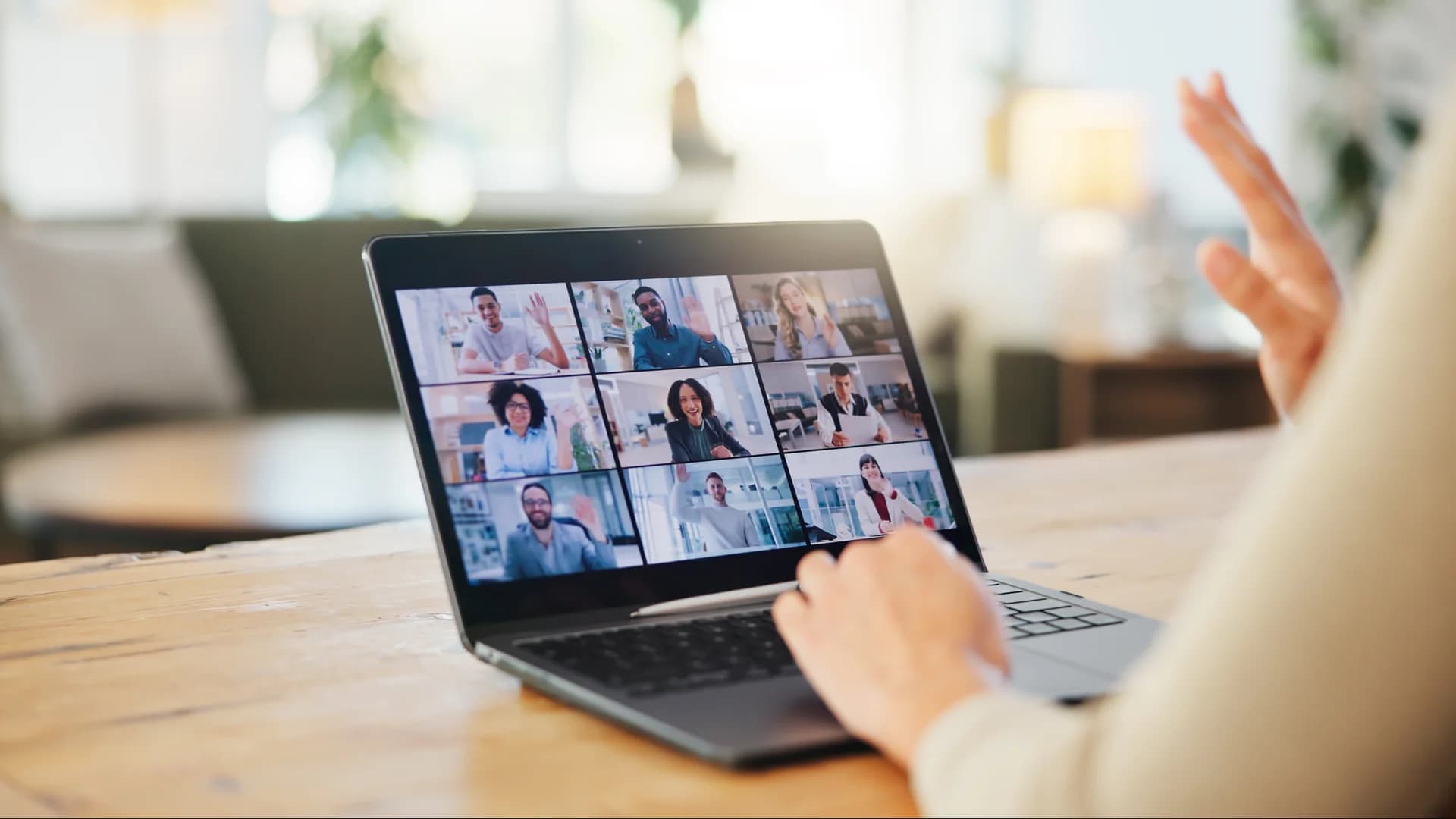
Virtual meetings are now where reputations are built. The promotion conversation happens over Zoom. The board presentation happens through a screen. The first impression with a new team member is a thumbnail-sized video window. And yet most leaders treat virtual communication as a diminished version of in-person interaction, applying the same habits with worse results.
Here's what actually makes the difference on camera: it's not your lighting or your backdrop, though those help. It's energy management, vocal variety, and how you handle silence. These are the skills that separate the leader who commands attention virtually from the one whose team secretly checks email during their updates.
On camera, energy translates at roughly 60% of its in-person impact. The animation that fills a conference room barely registers through a laptop speaker. This means you need to deliberately increase your energy to land at a level that feels natural to your audience.
This isn't about being louder or more animated. It's about being more intentional. Slightly more facial expression. Slightly more vocal range. Slightly more deliberate pauses. What feels 20% overdone to you reads as engaged and present on screen.
Sofia struggled with this. In person, she was magnetic. In virtual meetings, her team described her as "flat." Her coach had her record two versions of the same update: one at her natural energy level and one where she consciously pushed it up. When she watched both back, she could see the difference immediately. "The version that felt exaggerated to me was the one that actually looked normal on screen."
Try this: record a one-minute video of yourself delivering a key message. Watch it on mute first. Then watch it with sound. The gap between what you felt and what the camera captured is the energy adjustment you need to make.
In person, you communicate with your entire body. On camera, your face and voice carry the full load, and on audio-only calls, it's voice alone. Most leaders underuse their voice dramatically.
Pace variation. Slow down for important points. Speed up for energy. The monotone delivery that's tolerable in a conference room becomes hypnotic (and not in a good way) through a screen. When you reach your key message, drop your pace by 30%. The contrast signals: this matters.
Strategic silence. Silence on camera feels amplified, which is precisely why it works. A two-second pause before your most important point creates anticipation. A pause after a question gives people permission to think. Most leaders rush through virtual meetings because silence feels awkward. The best ones use it deliberately.
Vocal warmth. This sounds abstract, but it's physical. Before a meeting, do a 30-second vocal warm-up: hum, say a few sentences out loud, smile while speaking. Cold voices sound cold on screen. A warmed-up voice sounds present and approachable, which matters more when the only human data people have is what comes through their speakers.
Small technical habits make a surprisingly large difference in how you're perceived.
Look at the camera, not the screen. When you look at people's faces on your monitor, your audience sees you looking slightly down. When you look at the camera lens, they experience eye contact. You don't need to stare at the camera permanently, but for your key moments (opening, making your main point, asking for commitment), direct lens contact creates connection that screen-gazing doesn't.
Frame yourself intentionally. Eyes in the top third of the frame. Enough space above your head that you don't look cramped, but not so much that you look small. These details register subconsciously. A well-framed speaker looks authoritative. A poorly framed one looks like they haven't thought about how they're showing up, which is its own signal.
Stand up for high-stakes moments. If you're delivering a presentation or leading a meeting where energy matters, stand. Standing changes your breathing, your posture, your vocal energy, and your sense of command. It's the simplest hack for virtual presence, and almost nobody does it.
The single biggest presence killer on camera is filling every second with sound. Leaders who are uncomfortable with virtual silence talk faster, add filler words, and keep going long past the point where their message has landed.
On screen, silence reads as confidence. The leader who makes their point and then waits, comfortably, for the response, looks composed and in control. The leader who makes their point and then adds "so, yeah, that's basically what I was thinking, but I'm open to other thoughts" looks uncertain.
Practise ending your statements with a period, not an ellipsis. Say what you mean. Stop. Let the silence do the work. Your audience will interpret that composure as exactly what it is: presence.

Leadership Development Facilitator & Coach
At Leadetic, leaders and teams learn to bring clarity, purpose, and measurable impact to their work. As Co-Founder, I design and deliver leadership programmes, academies, and coaching initiatives that turn learning into daily practice and collaboration into results.
View profileMost leadership happens without a reporting line. Three tested approaches for getting things done when you can't tell anyone what to do.

Starting with context instead of your recommendation loses senior audiences in 90 seconds. Here's how to structure presentations for executive impact.

The art of constructive dissent. Specific phrases, timing tactics, and framing techniques for challenging someone with more power than you.