
3-Act Storyboard
Download options
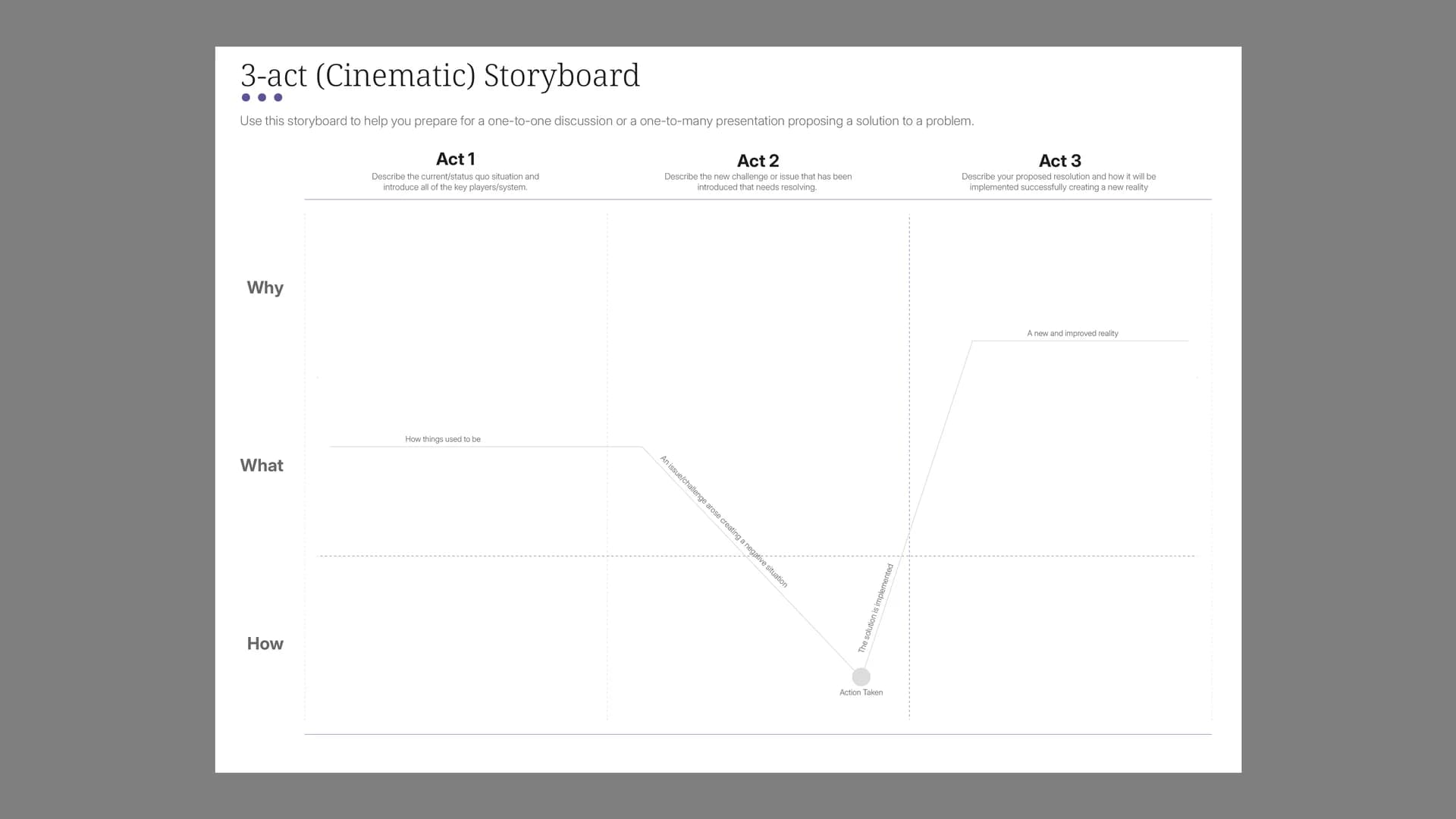
Borrowed from cinematic storytelling, this storyboard helps you structure any persuasive communication as a three-act narrative. Act 1: describe the current situation and the key players. Act 2: introduce the challenge or disruption that created the problem. Act 3: present your solution and the new reality it creates. Each act is broken into three layers (why, what, how), giving you a grid that maps both the story arc and the practical substance underneath it.
When to use it: When you need to persuade someone to support a change, whether that's a one-on-one conversation with your manager or a presentation to a room of 50. It's particularly effective when the audience doesn't yet feel the urgency of the problem. The three-act structure builds tension naturally: here's how things were, here's what disrupted them, here's the way forward. That progression is more compelling than jumping straight to "here's my recommendation."
How to get the most out of it: Don't skip Act 1. The temptation is to rush past the status quo and get to the exciting part (your solution), but Act 1 is where you establish shared reality with your audience. If they don't recognise the world you're describing, nothing that follows will stick. In Act 2, be specific about the disruption. "Things have changed" isn't enough. Name the challenge, quantify it if you can, and make it feel real. Act 3 should do two things: present the solution and paint a picture of what life looks like after it's implemented. The "new and improved reality" row at the bottom is where you earn the yes. Use the Why/What/How layers to check that each act works at every level, not just the headline.