
The Opening & Closing Builder
Download options
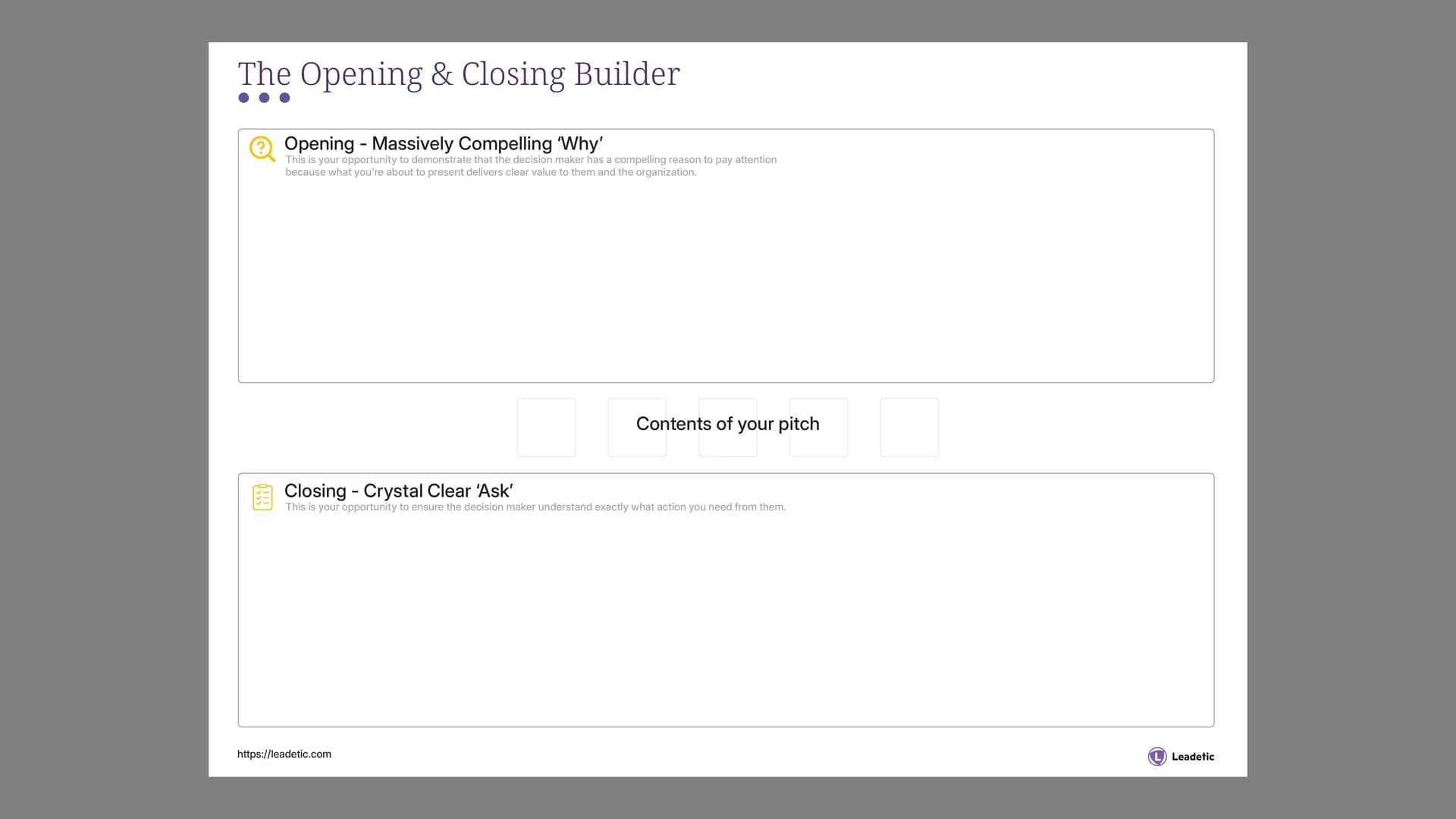
The middle of your pitch usually takes care of itself. It's the first 30 seconds and the last 30 that people get wrong. This worksheet focuses on exactly those two moments: crafting an opening that gives your audience a compelling reason to pay attention, and a closing that makes the ask unmistakably clear. Fill in both before you build anything else.
When to use it: After you've structured the body of your pitch (using the Story Arc Board or the Structure Template, for example) and need to nail the bookends. Also useful when you're reworking a pitch that felt flat. Nine times out of ten, the problem is that the opening didn't create enough urgency or the closing was vague. This worksheet isolates those two moments so you can fix them without rethinking the whole thing.
How to get the most out of it: Write the closing first. Decide exactly what you're asking for, from whom, and by when. Then work backwards to the opening. Your opening should make the audience feel the weight of the problem so clearly that your closing feels like the logical next step. If there's a gap between the two (if the "why" doesn't naturally lead to the "ask"), your pitch has a structural problem worth fixing before you present. Keep both sections short and specific. A compelling opening isn't a three-minute backstory. It's one sharp statement, question, or data point that makes the room lean in.